My son supposedly does
“no real sport”
You may know the line. My son Nikita is eleven and plays golf — properly, in the squad, with tournaments and daily training. Until about a year ago he sometimes came home from school a bit dejected. The reason: "Golf? That's not a sport." That's how his classmates talk, and honestly, plenty of adults think no differently. Golf sounds like going for a walk, like knocking a few balls across a meadow, like a pastime for later in life.
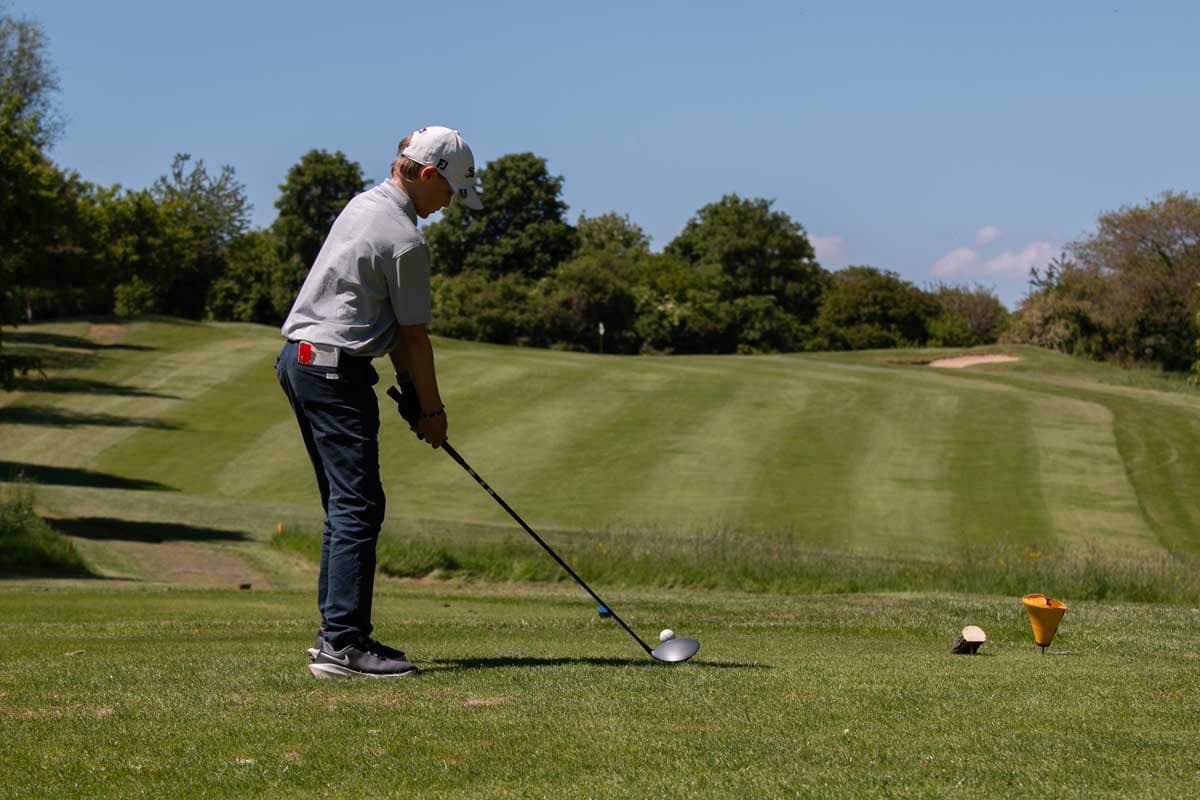
As his father and coach I see something else every day. I see a child doing planks and the fitness work from his squad training, walking kilometres on the course and working on a swing that demands the whole body. For Nikita, golf isn't a stroll. It's competitive sport, with everything that goes with it: strength, concentration, the fight against yourself.
Here I'll show you what really sits behind it — physically, athletically and in the playground too. Not to convert anyone. But because I'm convinced of one thing: once you've seen how much athleticism and will go into this sport, "not a sport" suddenly sounds pretty quiet.
"Golf isn't a real sport." — "I'll show the lads."
Golf is a recognised competitive sport with associations, tournaments and development squads — for children too. It demands athleticism, technique and concentration, not just patience.
Where does the line come from in the first place? Golf spent a long time being seen as a sport for older people, something genteel and slow. That picture is stubborn — including among children, who pick it up somewhere. So when Nikita tells people at school he's playing a tournament at the weekend, he doesn't always get respect. Sometimes he gets a smirk.
What impresses me about him: he doesn't let it make him small. "I'll show the lads that golf is a real sport," he said. That sentence is the thread running through this article — because the showing has actually begun. And the cliché crumbles fastest where you'd least expect it: at the body.
What golf really asks of the body
A round of golf on foot is roughly 8 to 13 kilometres depending on the course, and a much-quoted field study puts a walked round at around 1,400 calories burned. The swing itself is a powerful whole-body movement — from the ground, through the hips and the trunk, into the arms.
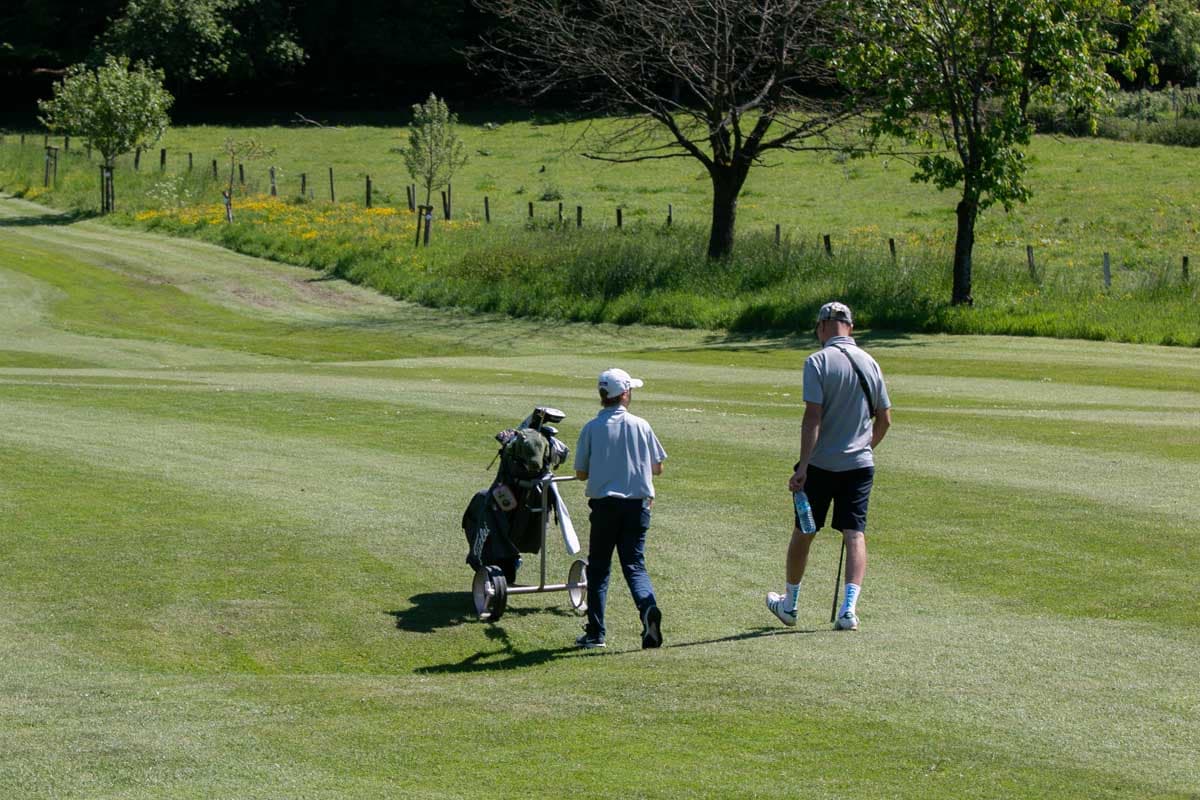
Sounds like a gentle stroll? The numbers say otherwise. An 18-hole course measures roughly 8 to 13 kilometres depending on its length (about five to eight miles), and you cover that on foot. A small field study measured around 720 calories for nine holes walked with the bag carried — extrapolated to the full round, about 1,400. And the swing is no flick of the wrist: sports science describes it as a coordinated whole-body movement, in which force is passed from the ground through the legs, hips and trunk into the arms — a bit like the crack of a whip.
With Nikita I see it every day. He does planks and the fitness work from his squad training — not because it looks smart, but because athleticism, stability and concentration are what count in competitive golf. In the professional game too, more and more players now train like athletes. Anyone who tries golf seriously notices quickly: "gentle" isn't the word for it.
When your child gets mocked for their sport
The best answer to mockery is letting people find out for themselves: take the mockers out onto the range once and they quickly notice that golf is fun and harder than they thought — after that the comments usually stop on their own.
Lines like "an old men's game" or "walking about knocking a few balls across a meadow" can land hard on a child — especially at an age when belonging is almost everything. At home we talk about how everyone's allowed their own opinion, and how lines like that are usually repeated out of ignorance. That already takes a lot of the pressure off. But the thing that really worked was something else.
At some point Nikita simply took a few friends along to the range. After that the silly comments stopped — it was fun, and it isn't easy either. With a club in their own hands they noticed it isn't at all simple to send a ball cleanly over any distance. Nothing convinces as fast as having a go yourself.
What the squad changes — on the course and in the playground
Squad status makes achievement visible: a squad hoodie with the association's logo works in the playground like the shirt of a big club — suddenly the sport that used to get smirked at counts.
Being a squad player means regular training, tournaments, support from the association — competitive sport with structure and discipline. On the outside, all of that becomes visible through a single item of clothing. Nikita wears his squad hoodie with the big logo of the LGV Rheinland-Pfalz-Saarland. And in the playground, that logo tells a different story from "only golf".
His classmates wear the shirts of big football clubs — mostly as fans. Nikita's hoodie isn't a fan shirt; it's the sign that he plays for an association himself. Since he started wearing it, the way people see him has clearly shifted. And then came a moment that says more than any explanation: his PE teacher turned up, completely out of the blue, at one of his home tournaments on the course.
Bringing golf into your own school
Golf gets into school through enthusiasm: if a child talks about it in a way that catches, the spark jumps across — to teachers and to classmates. From there, PE staff and the local golf club can turn it into a taster day or a school project.
Nikita is very talkative, and once he starts on golf there's barely any stopping him. That enthusiasm jumped across to his PE teacher quickly. By now several children — some of them considerably older — turn up regularly at training and on the short course. One golfing child has pulled others along.
The next step is already planned: a golf school project, as things stand over the coming summer holidays. Nikita made the contact himself, through his PE teacher, to our club's junior organiser. And this is exactly where you can start: if your child is curious, just try golf out rather than talking about it. Ask at the club or at school about a taster course or a school project. Getting started is closer than most people think.
What stays
"Golf isn't a sport" has turned into something else in our house. Not through grand words, but through a child who simply kept at it. Nikita has shown what many don't see: that there's athleticism behind the swing, kilometres and concentration behind the round, and real training behind the squad hoodie. The mockery has grown quieter, because claims turned into experience — on the range, in the playground and soon in his school.
For us as parents, something other than trophies counts in the end. Nikita will make his own way, and we'll support him — above all so that he stays healthy while he does, wherever his own path takes him. If this article has made you curious, then give golf a real chance. Try it yourselves rather than talking about it. Maybe your child will find exactly the enthusiasm that set everything rolling in our house.
Golf. My sport. Join in.
Sources
Peer-reviewed studies:
- Rachnavy P. et al. — Foot–ground interaction and clubhead speed: impulse-based energy transfer as the key mechanism in the golf swing. Frontiers in Sports and Active Living, 2026. Study of 30 adult players; describes the swing as energy transfer from the ground along the kinetic chain. frontiersin.org/journals/sports-and-active-living/articles/10.3389/fspor.2026.1790645/full
- Systematic review — Ground Reaction Force and Centre of Pressure During the Golf Swing and Associations with Clubhead Speed and Skill Level. Sports Medicine (Springer), 2026. Relationship between ground reaction force and clubhead speed. link.springer.com/article/10.1007/s40279-025-02391-3
- Wolkodoff, N. — Energy Cost of Golf. Colorado Center for Health and Sport Science, 2010. Small field study (eight golfers); around 720 calories for nine holes walked with the bag carried. cochss.com/howmanycaloriesdoyouburningolf/
Further sources:
- Golf.com — How many calories do you burn walking 18 holes? Around 1,400 calories and about five to eight miles (8–13 km) over 18 holes walked. golf.com/instruction/fitness/how-many-calories-burn-walking-18-holes/