Mental strength in junior golf
— it doesn't start where most people look
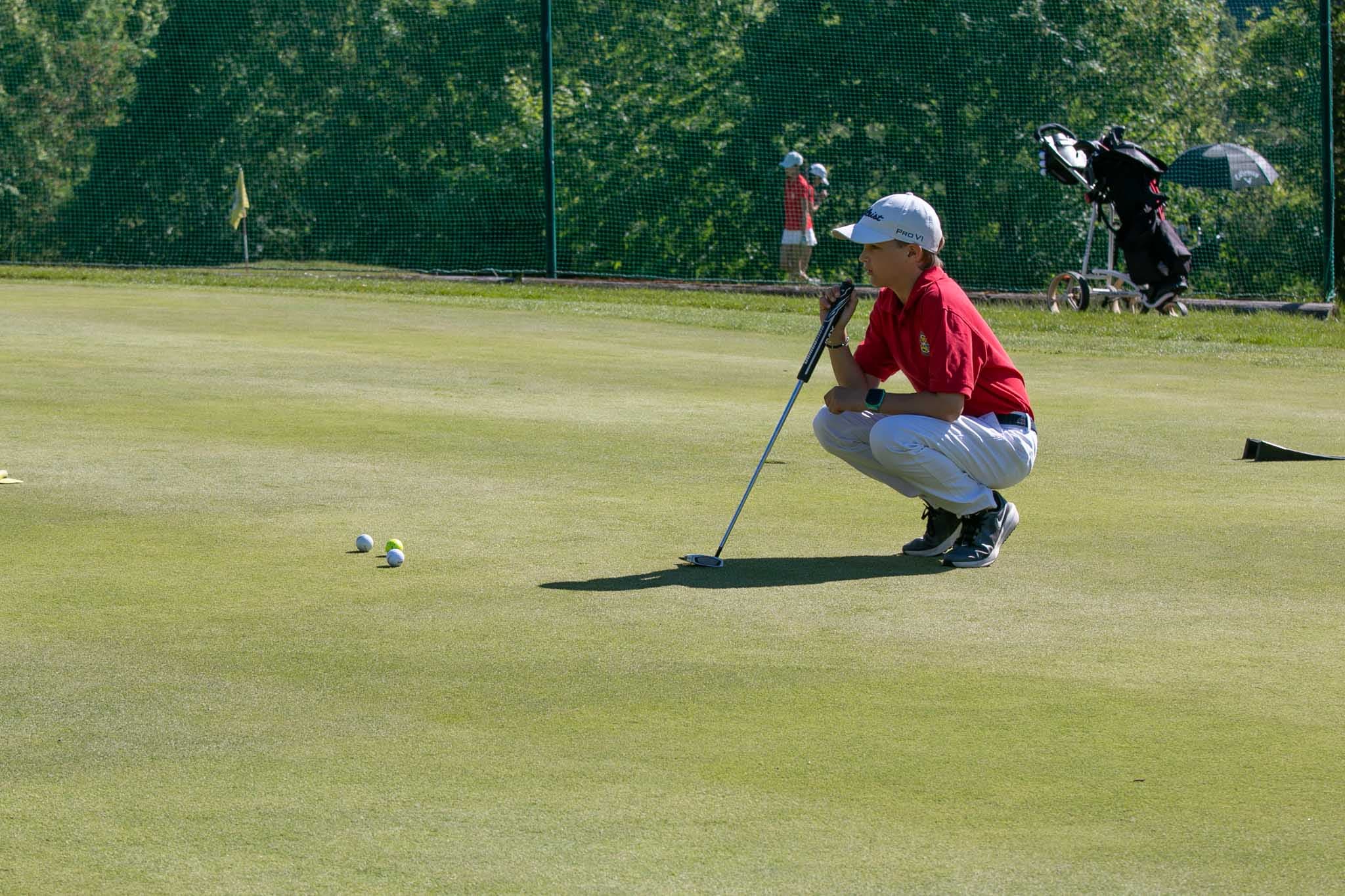
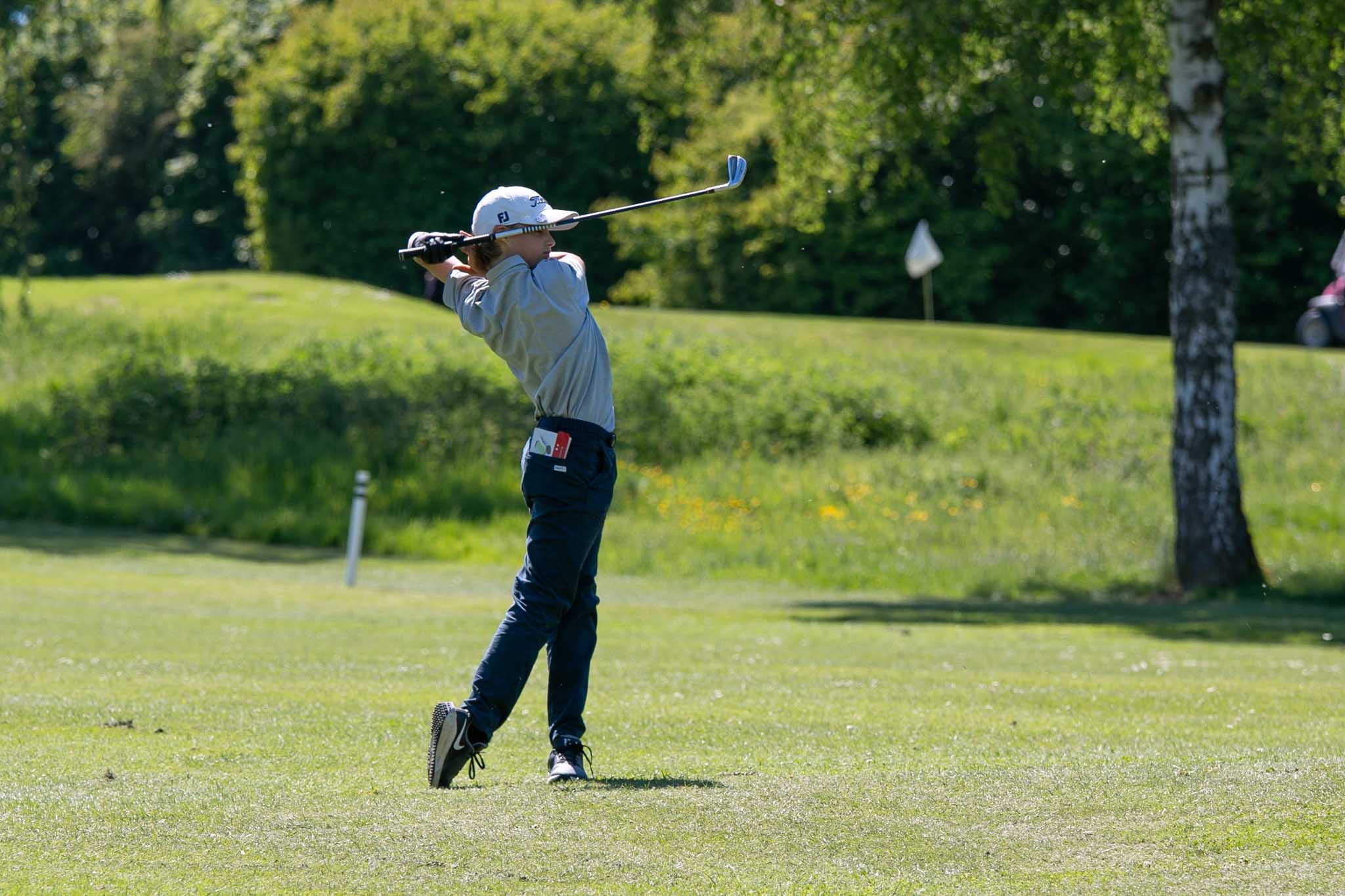
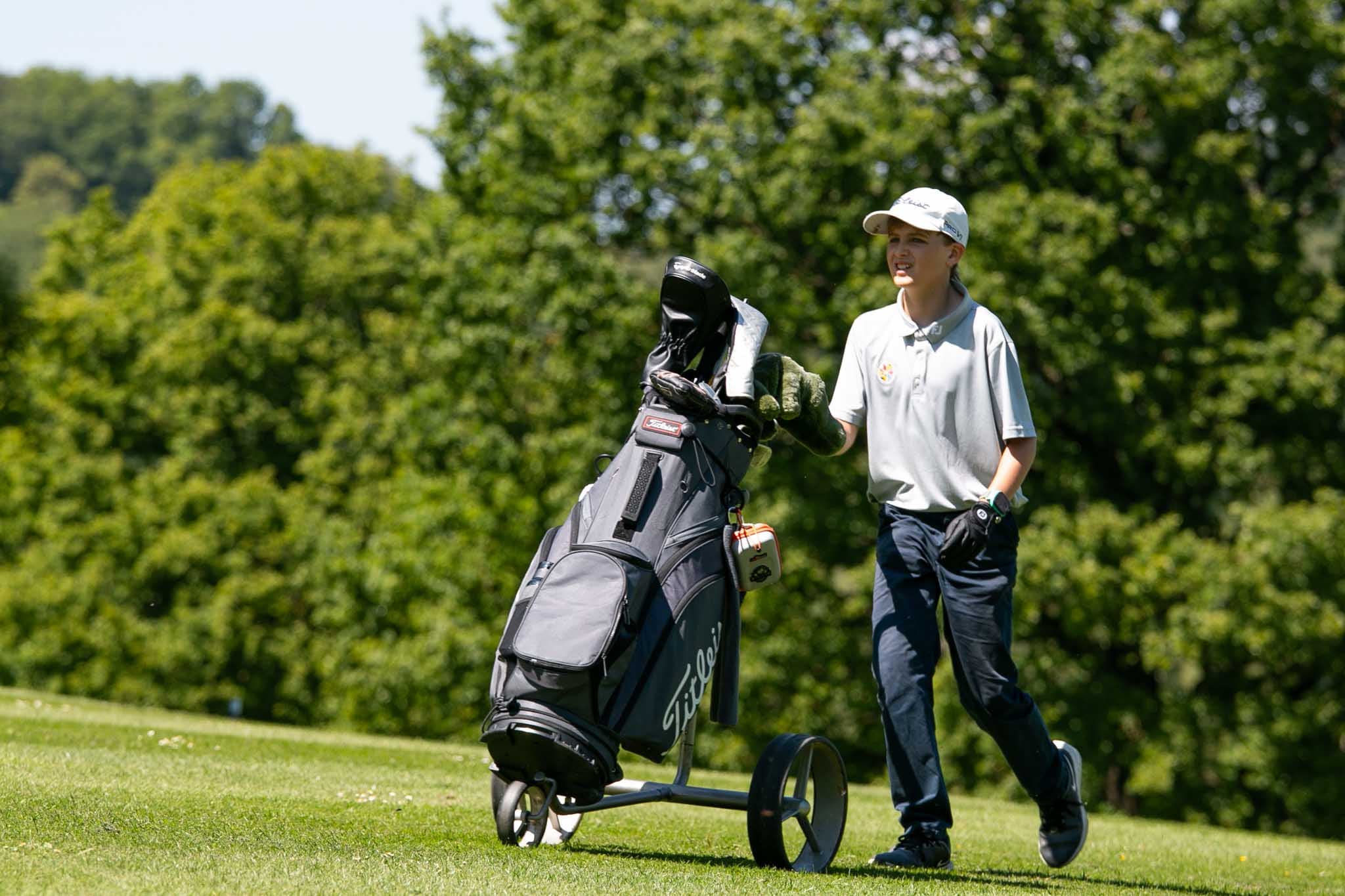
People often ask me: "What is it you do with Nikita that makes him so calm?" Anyone who watches Nikita play sees it straight away – he's in his element. Focused, but not tense. You can tell he's enjoying it. Even when things get difficult.
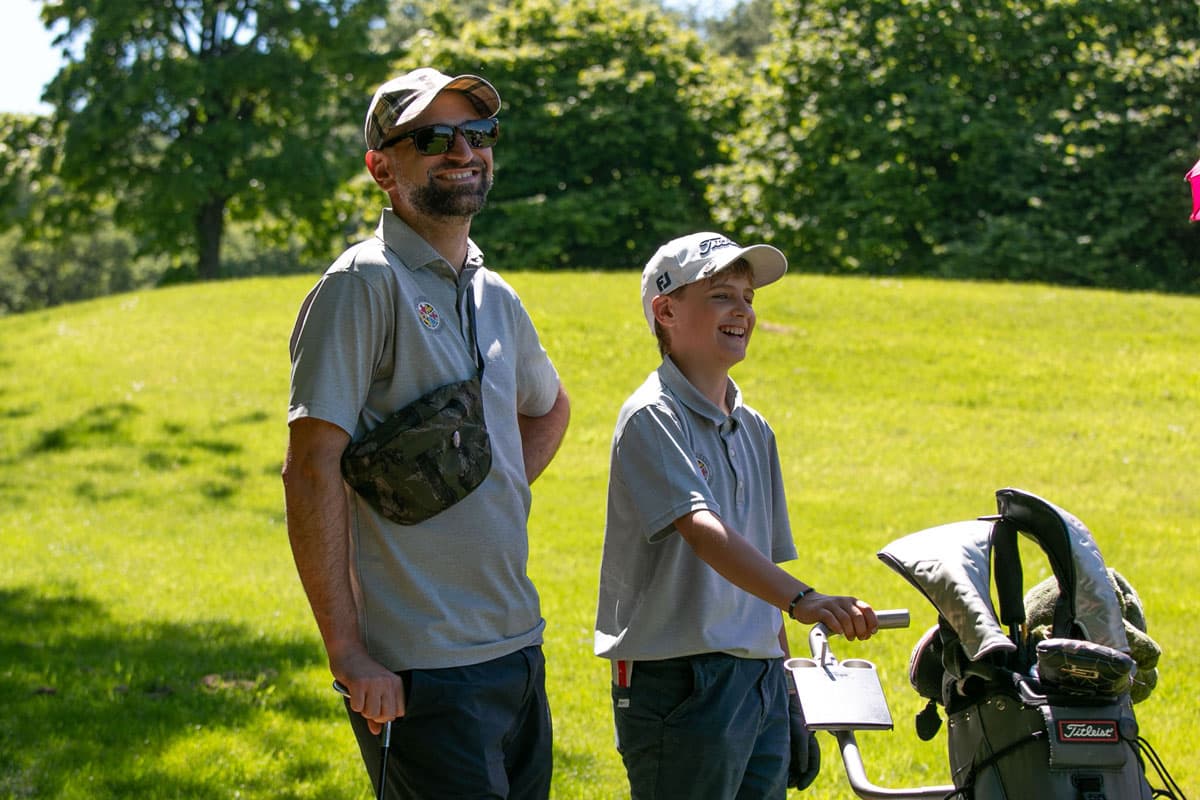
The honest answer: I can't explain it in one sentence. There's no method, no routine, no special coach we've brought in for him. And no – he isn't "just like that" either. Of course he brings something of his own. But what you see out on the course is no accident. It's a path we walk as a family.
The surprising part: that path didn't start with golf. We weren't looking for it when Nikita took up the game. It was there beforehand – and we simply carried it over to the sport, the way we carry it into every other part of life.
I'm writing down what we actually do. Not a recipe — just food for thought. Maybe it shifts something in how you see it. Maybe it helps your child hold on to the fun. And maybe it makes life together a little lighter.
"What is it you do with Nikita?"
We don't do anything with him. We do something with ourselves.
When someone asks me this, I usually notice quickly: they're expecting a method. A mental coach. A guidebook. Something you can apply to the child so the child gets mentally stronger.
I understand that – and this is exactly where the rethinking has to start.
What you see in Nikita out on the course isn't the result of mental training. It's the result of how we live with him as parents. What we say. What we don't say. How we react to his results. And above all: what he sees us do.
How do I teach my child mental strength in golf?
It starts with you, not with the child. Mental strength doesn't come from training for the child, but from what parents say, what they show, and how they react to results.
Most parents who ask me are looking for something they can apply to the child. A specialist to work with them. Breathing techniques. Visualisation. Mental coaching. And yes – those tools exist, and we use some of them ourselves. I'll come to that.
But the most important part comes before it: before we teach our child to handle pressure, we should make sure it doesn't build up in the first place. That takes us, the parents.
Why? Because we pass pressure on without noticing.
We live in a society built on achievement. More, higher, better. We've internalised it so deeply that we pass it on to our children without meaning to. Not out of malice. Not on purpose. But it works all the same.
An example: "You'll definitely play under your handicap today!" Plenty of parents say that with a smile, as encouragement. But what does the child hear? An expectation. And no child wants to disappoint their parents. Children will do anything to make us proud. That isn't an accusation – that's what a child's love looks like.
The problem is this: what we mean as support arrives with the child as an expectation. And they will do everything to meet it. If I only ever talk about results, then my child has to deliver results.
How do I know? Not from books. I know performance pressure from my own life – very personally.
I grew up in the Soviet Union. There, pressure wasn't something that came and went – it was a permanent state. Always present. Always tied to punishment. At school we didn't just have a board with the best pupils. We also had a board of shame with the worst. And it wasn't only the lazy children who ended up there, but children who simply didn't have it in them, for all sorts of reasons.
I developed a lot of methods for surviving under that pressure. Not one of them was pleasant. Having to perform while constantly expecting punishment – that's pure tension and stress.
And that's exactly why I knew: I am not passing this on to my child. I've gone – with a wink – from being an expert at surviving pressure to being an expert at the opposite.
How do I notice that I'm putting pressure on my child?
Pressure is usually non-verbal: hurried last-minute tips before the start, wild gesturing at the hole, shouts of "Concentrate!" Even passing remarks about costs or weekends land with a child as "I have to deliver".
I don't want to suggest that anyone here deliberately puts pressure on their child. People who really do that won't be reading this article – they aren't looking for food for thought, they think their method is right. This is about something else: being aware of your own behaviour.
And yes – I know self-reflection is hard. But not impossible. It helps to watch yourself: how do I talk to my child about golf, about his goals, about training?
What I see at tournaments gets to me every time.
I see parents giving hurried last pieces of advice just before the start – worked up, tense, serious-faced. That tension goes straight into the child. They can't settle themselves any more, and they arrive at the first tee like that, where other parents may well be standing. And now the child probably wants to make a good impression too. Just imagining it finishes me off.
I see parents gesturing wildly on the course. Pulling a face at a bad shot, or making odd movements with their body. Yes, I understand – you're willing them on, that's human. But it doesn't have to happen in front of the child.
And I hear well-meant coaching: "Concentrate!" – of course the child wants to concentrate. They just can't right now. And pressing on the sore spot only makes it hurt more.
Because we're always communicating – even when we say nothing. Body tension, facial expression, gestures: our child reads all of it. In a heartbeat.
What we do instead – and which tools help Nikita out on the course when the tension rises: I'll come to that in a moment.
And something else that often gets underestimated: competitive sport costs. Weekends, journeys, equipment. Children see that. And if we mention it even in passing, they think: "I have to deliver, when my parents are doing so much for me." Or worse: what if I can't manage it…
We talk openly about the costs, but as a way of showing value, not as a sacrifice. Nikita should know what he has and recognise its worth. He's happy to chip in on purchases too. And we say it plainly: we enjoy supporting him on his way. On top of that: we like travelling. We rebuilt our everyday life rather than sacrificing it – we work in the car while Nikita trains. I go running in that time. So there's something in it for all of us, and it doesn't feel like a sacrifice.
I'm convinced that for our children, nothing matters more than pleasing us. That isn't a weakness. That's what a child's love looks like. And that's exactly why the responsibility sits with us.
Once you develop that empathy as a parent, and picture how you would feel under that pressure yourself, you're halfway there.
What do I say to my child before a golf tournament?
Say: "Play the best you can play today – take it as it comes and enjoy it." Avoid lines like "You'll definitely play under your handicap". That arrives with the child as an expectation.
For me the most fundamental thing is this: accepting what is – and giving permission for all of it to be there. It takes enormous pressure off when you allow yourself, and your child, to accept any result.
What do I say to Nikita before every tournament? Exactly that: "Play the best you can play today. Take it as it comes. Trust your ability, trust what you can do – and enjoy it. Because that's what counts."
He doesn't always accept straight away that something went differently than he wanted – but he has tools to find his way back quickly. Because that's what matters: we need a certain state to be able to play our game – light, unburdened, focused. We've often experienced ourselves that the right state leads to good results. We just never learned to use it deliberately, let alone teach it to our children.
And yes – pressure can lead to good results too. But not in a joyful way. Definitely not. I speak from experience there. And surely we want our children to find joy in what they do, and for success not to be tied to pressure and negativity. There's an easier way. And a happier one.
And after the round?
Of course we ask: how was it? And the negative experiences come first: everything he didn't manage, all the putts that didn't drop, the drives that weren't how he wanted them.
This is where we come in. We ask specifically: which putt exactly? Were all the drives bad? That's how we get Nikita out of the big "everything went wrong" – because we all tend to generalise, and our children pick that up from us.
Then we point the focus: so what was good? He finds it. And what didn't go so well – that too. We encourage him to accept it: not every shot lands, and that's fine. It's part of golf. And the shots that didn't come off are what help us improve the game.
But we don't paper over it with "oh, it's not that bad." It can feel bad in the moment. And that's allowed too. But then: right, the glass is half full. What do I take from this? What do I need to talk through with Sascha? Do I need help, or do I know myself what to do?
How do I react to my child's bad round?
Ask "How was it?" first, then get specific instead of generalising. Point the focus first at what went well. The bad is allowed to be there – don't paper over it, but frame it differently.
We have to allow ourselves to take it as it is. Nobody has to reach a particular number in a particular time. It doesn't always have to be the podium. If it happens, we're delighted. If it doesn't, we're delighted for the others. It's allowed to be exactly as it is right now.
Our society doesn't live that way. We tilt at windmills like Don Quixote – against what is. That doesn't mean we have to approve of everything. Only that we accept what has already happened.
The round wasn't the one the child wanted? Fine. We look at what we can learn from it. What do we take on board? But first and foremost: accept it.
Nikita is very driven himself. The bar he sets himself is high. And that's fine – he's allowed to aim high. But we watch that it doesn't turn into pressure.
What matters to us is showing him: results are a path, not just a destination. We deliberately call them something else: not "defeats", but results we didn't want. Because there's potential in those too — it's the only way to see where you can improve, and then actually do it.
When you turn the focus from "bad" to "there's potential in there", children respond quickly – if you give them permission to see it that way. And above all: if you see it that way yourself.
Which mental techniques does Nikita use on the course?
Box breathing (4-4-4-4), his own pre-shot routine worked out with his coach Sascha, deliberate reflection after the round. But those are only tools – the parents' attitude stays the main engine.
Everything above is the lion's share: the attitude, the mindset, the self-reflection. But yes, there are a few concrete tools we use. Not more than that – and this isn't a recommendation, it's what works for us.
Breathing. The simplest one first. Nikita and I use box breathing: breathe in for 4, hold for 4, breathe out for 4, hold for 4 – and round again. It calms you quickly. Nikita uses it when he notices he's getting more agitated or tense: between shots, walking to the ball, waiting on the tee. It helps him hold his focus without having to concentrate in a tense way. I use it the same way when something stresses me.
Routines. Nikita worked out his own pre-shot routine with his coach Sascha. It helps him stay with whatever matters right now, without getting distracted. Routines give structure and security: the brain switches into a familiar mode where nerves have less room. Routines before the tournament and before the game belong to it too.
Reflecting. We've already talked about this a lot – but it's a tool as well: walking the child through the reflection. Out of the generalising, out of the comparing. He's allowed to develop at his own pace. Recognising the chances and getting clear: where can I get better? A child can't do that alone. That takes us, the parents.
Schooling. Nikita goes to a Waldorf school. Not because of the anthroposophy, but because he's allowed to learn there at his own rhythm and in his own way. From experience, rather than from given knowledge. Without pressure, without comparison, without marks. That surely plays a part in him playing his game with joy and handling results he didn't want more calmly.
What changes when parents start with themselves?
The child gets calmer, because they feel: I'm allowed to be here as I am. But that's a consequence – not the goal. The goal is a way of living in which pressure doesn't build up in the first place.
It isn't a method. Not a single tool. It's a way of living. And the way I see it, change doesn't come from handing the child a technique while you stay the same yourself – in how you communicate, perceive, watch yourself and reflect.
It's easier to see the cause somewhere else and hand the job to someone else. But there's no more effective way than starting with yourself.
Maybe – just supposing – we put ourselves as parents under pressure to do the best for our child. I'm convinced we all want that. But maybe we've got the wrong tools for it. And nobody taught us what would be more natural and easier.
It's tempting to look for a pill that makes the problem go away. But the way I see it, it isn't one thing, it's a great many. And above all: empathy, understanding and acceptance.
And yes – less control and more trust. I'm convinced our children find their way if we let them. Without controlling every step and knowing better anyway. Because even if we do know better: maybe my way isn't exactly the right one for my child.
Children follow us. When we release our own pressure, it releases in the child too. And that carries over to the people around us. That's how we help our children most easily – and for the long run.
Studies in sport psychology show how strongly parents' behaviour shapes the way a child experiences their sport – and how wide the gap is between what we mean as support and what arrives with the child. Up to 90 per cent of girls and 75 per cent of boys in competitive youth sport stop within the first five years. The main reason: it isn't fun any more. And children, by the way, don't define fun as winning, but as being allowed to try hard, being treated fairly, and good coaching.
There's no shortcut. No magic wand. It's about mindset, about empathy for your child, and about being willing to look at yourself.
Performance and results don't have to be tied to pressure and hard graft. That runs deep in our society – work hard for the best results. It may well be the right way for some. Not for me. And not for my child either.
I choose joy and lightness. And that doesn't mean I'm lying on the sofa being lazy – it means what I do doesn't feel like hard work. It feels like something I want to keep doing. Like writing this article, even though it takes hours.
That's my choice. And if it feels right to you too: try a few things. At the next tournament, tell your child only "Play the best you can play today" – and after the round, ask about the experience rather than the score. Who knows, maybe it works well. And if it doesn't, that's fine too.
Golf. My sport. Join in.
Sources
Peer-reviewed studies:
- Lobinger, B., Eckardt, V. & Lautenbach, F. (2021). Three perspectives on parental support in youth soccer: Children, parents, and coaches. International Journal of Sports Science & Coaching, 16(4), 886–899. DOI: 10.1177/17479541211011553
Institutional sources:
- Wörz, T. & Lecheler, J. (eds.). Coaching im Nachwuchsleistungssport — Stärken stärken, Defizite beheben und Drop-outs reduzieren. Pabst Science Publishers.
- Visek, A. (George Washington University). Fun Integration Theory — research project on how children define fun in sport.
- National Alliance for Youth Sports (NAYS). Survey on dropout rates in youth sport.